

The digital advertising industry has officially moved past the “panic” phase of signal loss. After years of bracing for the sunset of third-party cookies and navigating a complex web of global privacy laws, 2026 has arrived with a clearer mandate. We are no longer asking if the industry will change; we are defining the technical standards for how it functions now.
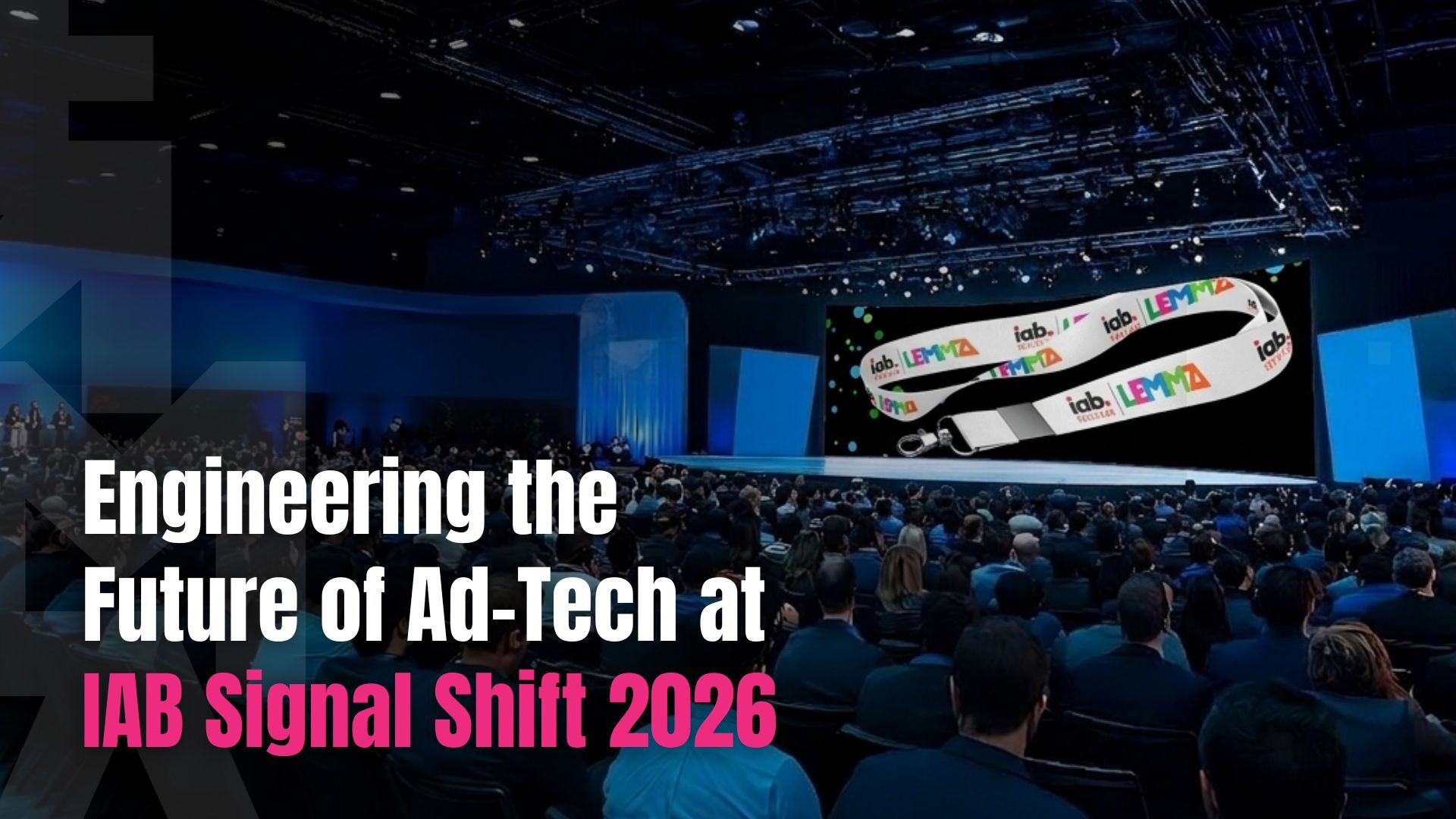
IAB Signal Shift 2026 in New York recently brought this transformation into focus. As a technical summit, the conversations centered on the “plumbing” of modern advertising: Privacy-Enhancing Technologies (PETs), server-side execution, and the emergence of the Agentic Web.
Key Industry Pillars for 2026
To understand where the industry is heading, here are three technical shifts that stood out across the IAB Tech Lab agenda:
- The Shift to Server-Side: Reclaiming the “Trusted” Signal
The industry is migrating away from browser-heavy, client-side tracking, which is increasingly restricted toward Trusted Server environments. By executing ad logic server-to-server (S2S), brands move the data “handshake” into a secure, controlled space they own. This isn’t just about faster page loads; it’s about data sovereignty. It allows advertisers to maintain a persistent, high-quality signal while ensuring that no data leaks to unauthorized third parties. - Scaling PETs: High-Performance Attribution Without IDs
Privacy-Enhancing Technologies (PETs), such as Data Clean Rooms and Multi-Party Computation (MPC), have evolved from niche experiments into the standard for post-cookie measurement. Instead of tracking a specific user, these tools allow two parties to “overlap” their data to find insights without ever exchanging raw information. We are entering the era of “ID-less” ROI, where brands can achieve precise attribution and campaign optimization through secure collaboration. - The Agentic Web: Advertising in the Age of AI Autonomy
2026 marks the rise of the Agentic Web, where AI “agents” can browse and make purchasing decisions on behalf of consumers. The IAB is actively drafting protocols like the Model Context Protocol (MCP) to define how the programmatic ecosystem interacts with these non-human “shoppers.” The definition of an “impression” is evolving, as the industry works toward ensuring advertising remains relevant and ethical in an AI-driven economy.
Programmatic DOOH: A Natural Fit for What Comes Next
Many of the shifts discussed at the Interactive Advertising Bureau Signal Shift from server-side infrastructure to privacy-safe measurement and AI-ready ecosystems closely mirror how programmatic Digital Out-of-Home already operates.
Executed through secure server-to-server integrations and activated via platforms such as Google Display & Video 360, programmatic DOOH relies on contextual, real-world signals rather than personal identifiers. As the industry moves toward trusted signals and ID-less outcomes, the channel demonstrates how advertising can remain data-driven, privacy-safe, and responsive to real-world context.
Looking Ahead: The Intersection of Standards and Strategy
The discussions that emerged from Signal Shift NYC are a reminder that “privacy-first” is no longer a constraint, it is a competitive advantage. The shift away from legacy tracking signals is forcing a long-overdue return to advertising fundamentals: context, quality, and transparent measurement.
At Lemma, we view these evolving IAB standards not as hurdles, but as a validation of the path we have always taken. By championing “Identity-Lite” environments such as Digital Out-of-Home and CTV, we have spent years refining the very “Outcome-First” models that the wider industry is now adopting.
As an IAB Tech Lab member and lanyard sponsor at Signal Shift 2026, Lemma is proud to have been part of these conversations shaping the next phase of the ecosystem. The goal isn’t just to replace lost signals, it’s to build a more resilient media ecosystem where performance is measured by real-world impact rather than invasive data points.
The “Signal Shift” is already underway, and what comes next will be defined by how well the industry builds on these foundations.