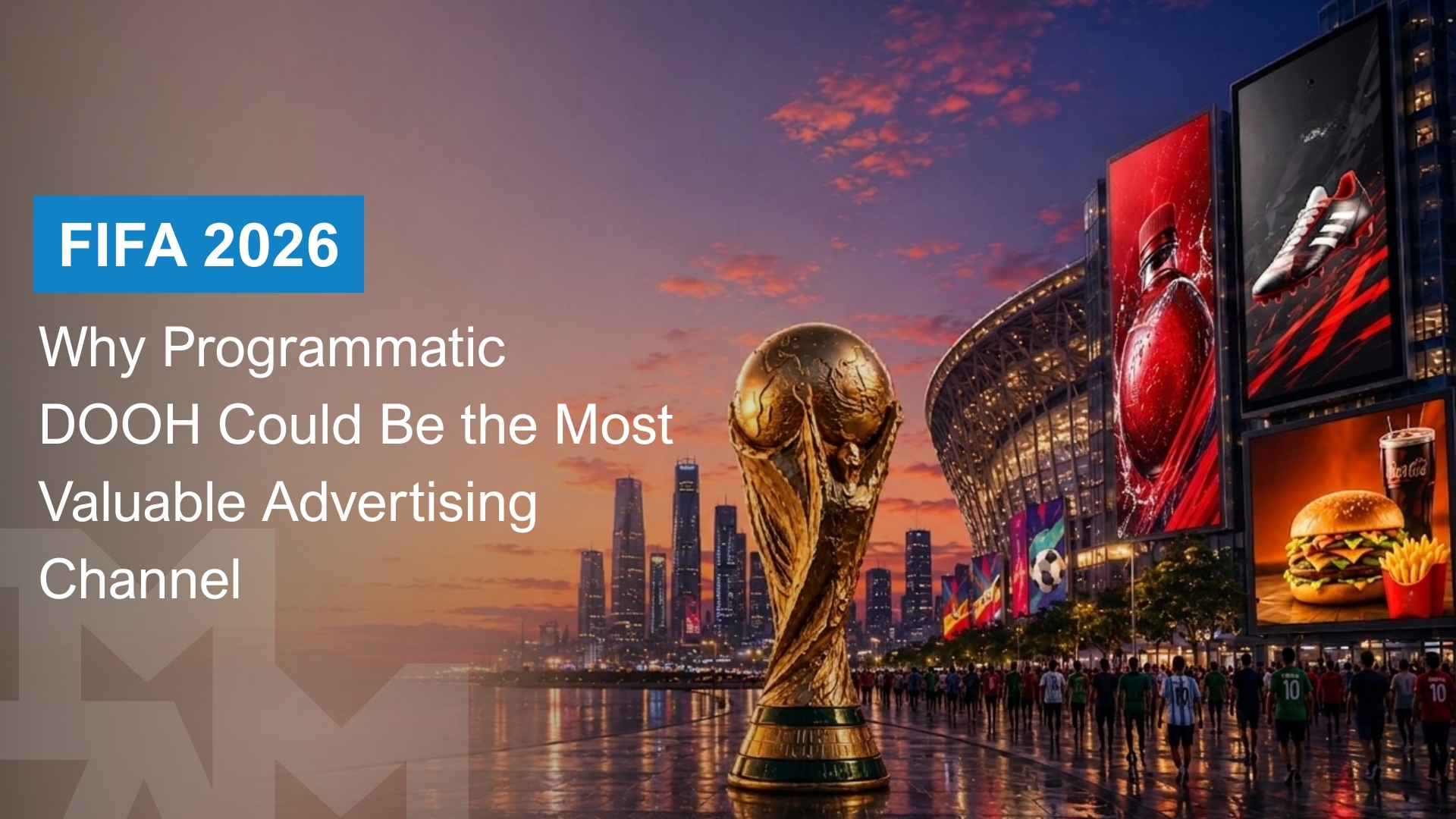


FIFA 2026, scheduled from 11 June to 19 July 2026, is set to become one of the biggest advertising opportunities the media industry has ever seen. With 48 teams and 104 matches across the US, Canada, and Mexico, the tournament is expected to drive nearly $10.5 billion in global ad spend as brands compete for audience attention during the world’s biggest sporting event. (WARC Global Advertising Trends: World Cup report)
From transit hubs to retail zones, millions of fans will be moving through different clusters throughout the tournament. This is exactly why brands are rapidly turning to Programmatic DOOH to capture audiences where the energy is actually happening.
Why Is the FIFA World Cup a Natural Fit for Programmatic DOOH?
According to economic impact studies published by InternetRetailing and Worldef, more than 5 million fans are expected to travel during the tournament, while global viewership is projected to touch nearly 6 billion viewers across platforms. That immense scale creates massive opportunities for brands to engage audiences far beyond traditional digital channels.
Unlike static outdoor campaigns, DOOH allows brands to activate campaigns dynamically across high-footfall environments. During a tournament where match dynamics and group standings change by the minute, flexibility becomes a critical competitive advantage.
For a media landscape driven by immediacy, DOOH brings digital responsiveness directly into physical spaces. Brands can adapt creative assets in real time using specific data signals:
- Live Match Dynamics: Real-time score updates, match schedules, and time-zone synced countdowns.
- Hyper-Localization: Team-specific messaging and country-specific language localization matching the nationality of surrounding fans.
- Environmental Variables: Time-of-day variables, localized weather conditions, and airport transit delays.
- Location Intelligence: Real-time audience movement patterns across host cities.
How Can Brands Capture the Real FIFA Audience Journey Outside the Stadium?
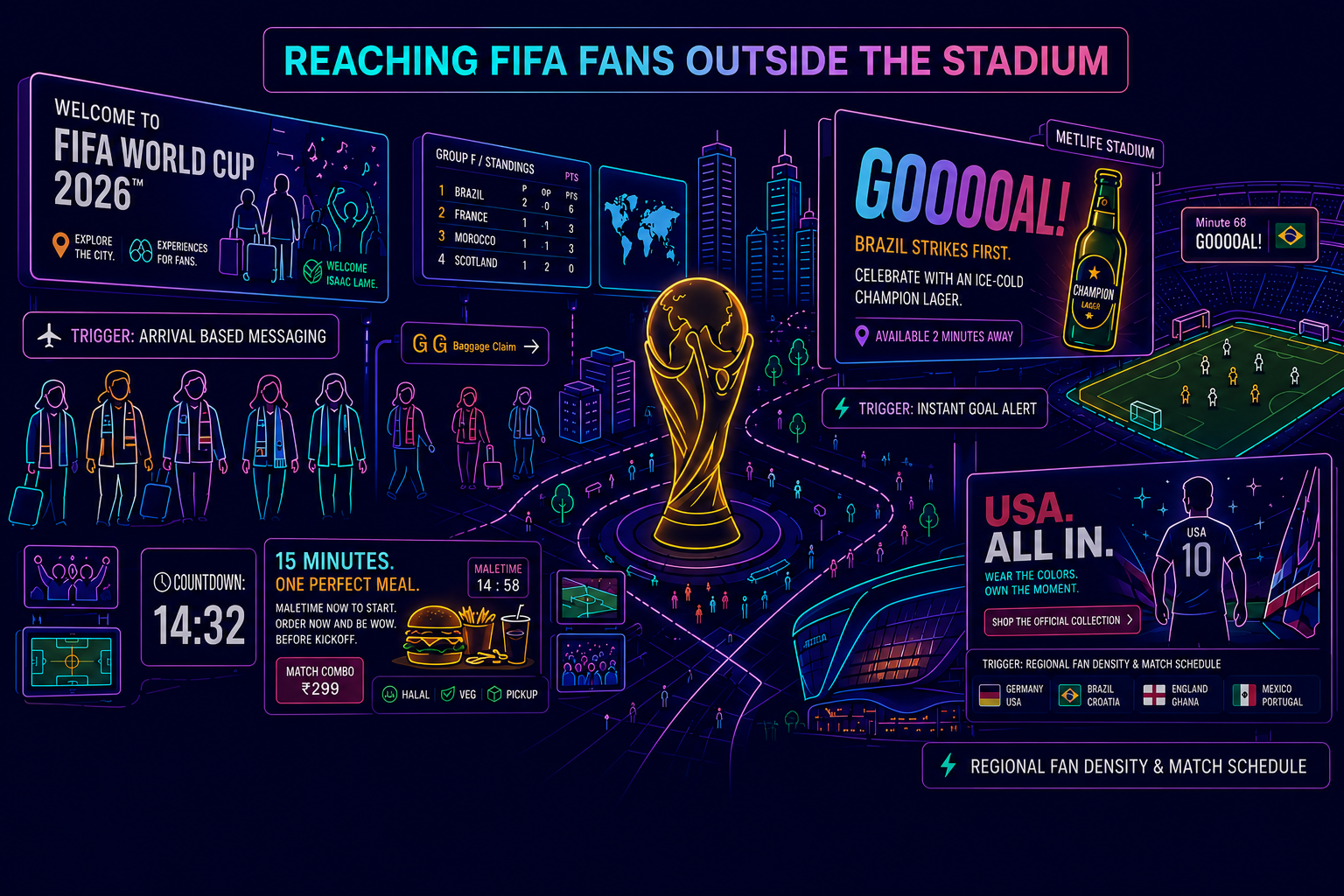
Transit networks, airports, and city centers can become live storytelling ecosystems during match hours through targeted triggers:
- The Airport Welcome: International travelers, football enthusiasts, and premium consumers navigate these spaces simultaneously. Brands can utilize airport DOOH networks to deploy arrival-based messaging tailored to incoming flights.
- The Golden Goal Trigger: A global beverage brand programs its DSP to instantly deploy celebratory creatives across transit screens within a five-mile radius of MetLife Stadium immediately following a crucial goal in the Brazil vs. Morocco group stage clash.
- The Halftime Rush: A Quick Service Restaurant (QSR) chain automates halftime meal promotions to display precisely during the fifteen-minute match interval as fans pack local sports bars.
- The Regional Takeover: A sportswear brand runs team-specific product creatives depending on regional fan density when the United States takes the pitch at Los Angeles Stadium.
Why Contextual Advertising Determines Campaign ROI in Live Sports?
The FIFA World Cup is fueled entirely by intense human sentiment. Fans react instantly to penalties, VAR decisions, and historic group-stage upsets. Programmatic DOOH allows brands to participate in these collective cultural moments as they unfold.
This is where sophisticated contextual advertising becomes critical. Advertisers can align their brand voice with the psychological state of the crowd by tapping into the natural fervor of the tournament, capturing the exhilaration of a last-minute victory, and channeling the passionate tribalism of international football rivalries.
Instead of running one generic campaign throughout the month-long tournament, smart advertisers can build multiple creative variations tailored to different match outcomes and audience emotional states. For global tournaments like FIFA, hyper-relevance drives significantly stronger memory recall than simple message repetition.
Maximize your performance: The Convergence of Retail Media and DOOH
One of the most lucrative opportunities during FIFA 2026 sits at the precise intersection of retail media networks and DOOH infrastructure. Fast-Moving Consumer Goods (FMCG), beverage, snacking, and QSR brands can combine retail purchase data with DOOH inventory to drive both brand awareness and physical foot traffic.
Advertisers can dynamically activate campaigns near high-performing retail stores, during peak weekend shopping windows, and around specific match timings to capture immediate consumer demand. As audience movement spikes across host cities from Mexico City to Vancouver, hyperlocal precision will yield much higher returns than broad national messaging.
The FIFA World Cup 2026 demands agile, real-time marketing. Lemma seamlessly bridges Outdoor to Outcomes by turning real-world impressions into measurable digital conversions. To see this strategy in action, review the Budweiser FIFA Case Study for a blueprint on executing live tournament activations.