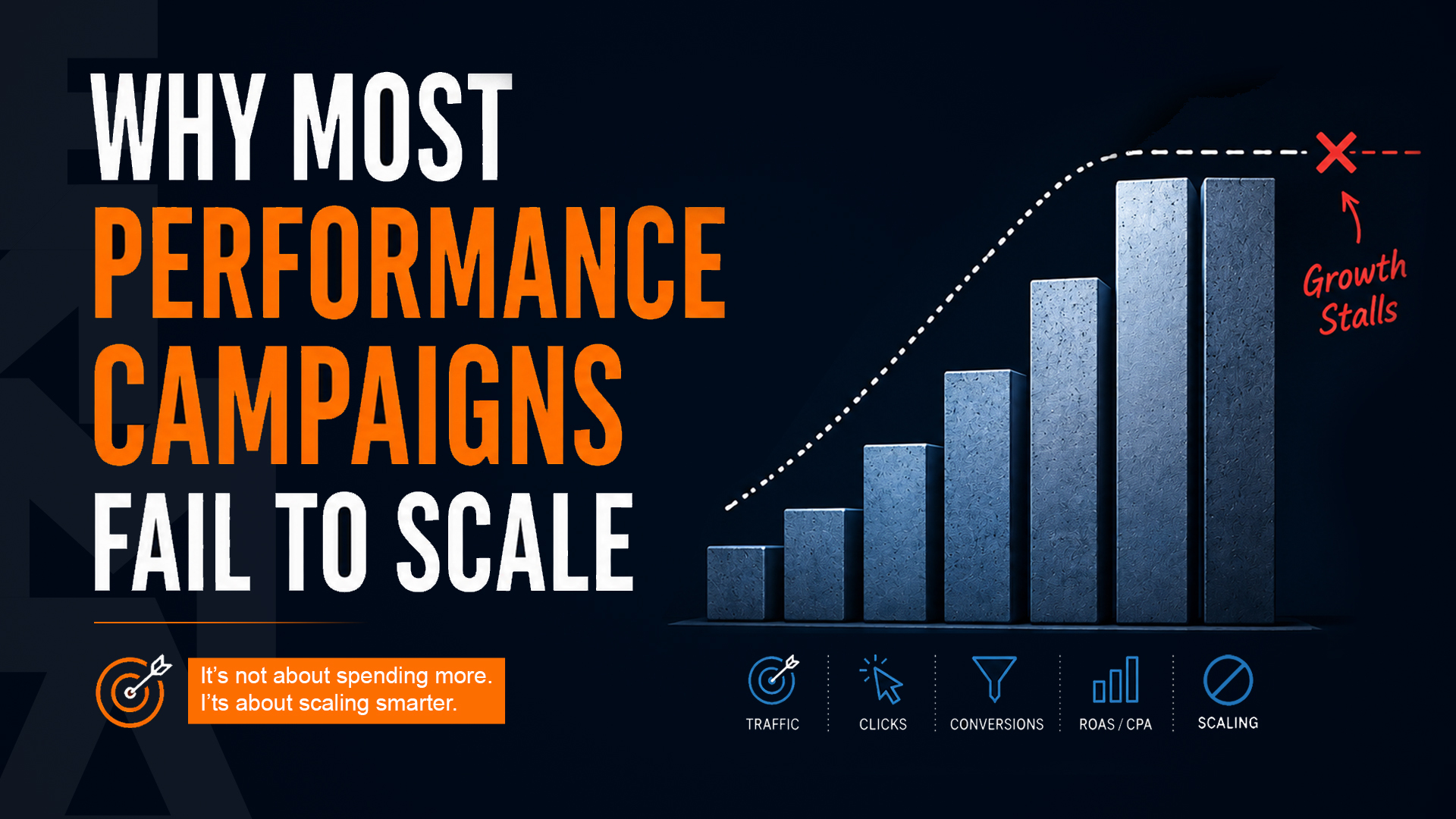


In today’s programmatic, omnichannel, and privacy-first ecosystem, performance marketing is no longer about last-click attribution, conversion-led KPIs, or short-term efficiency metrics alone. With signal loss, rising CPMs, audience fragmentation, and walled gardens, marketers face a critical challenge, scaling beyond saturated bottom-funnel audiences.
The reality is simple:
Optimizing only for conversions often means capturing existing demand, not creating new demand.
This shift is backed by data. Retargeting CPMs have increased by 18% year over year, showing how competitive and saturated bottom funnel inventory has become (Source: State of Digital Advertising Report).
This is why leading brands are shifting towards next-gen performance marketing, where the focus is on incrementality, full funnel attribution, and long-term customer lifetime value LTV, not just immediate returns.
The Real Reason Most Performance Campaigns Stop Scaling
- The biggest reason is poor funnel alignment and over-reliance on bottom funnel strategies. Nearly 79% of leads never convert due to weak funnel alignment, while full funnel strategies can drive up to 45% higher ROI (Source: Nielsen Report). At the same time, over-investing in BOFU campaigns often leads to diminishing returns and audience fatigue.
- What typically goes wrong is excessive dependence on retargeting high-intent users, limited investment in brand recall and consideration, and a heavy reliance on last-click attribution models. As a result, performance plateaus, CAC increases, and scaling becomes increasingly difficult.
What is full funnel performance marketing?
Full funnel marketing is about aligning media, messaging, and measurement across the entire customer journey. TOFU Top of Funnel drives awareness and demand generation, MOFU Middle of Funnel builds engagement and consideration, while BOFU Bottom of Funnel focuses on conversions and acquisition.
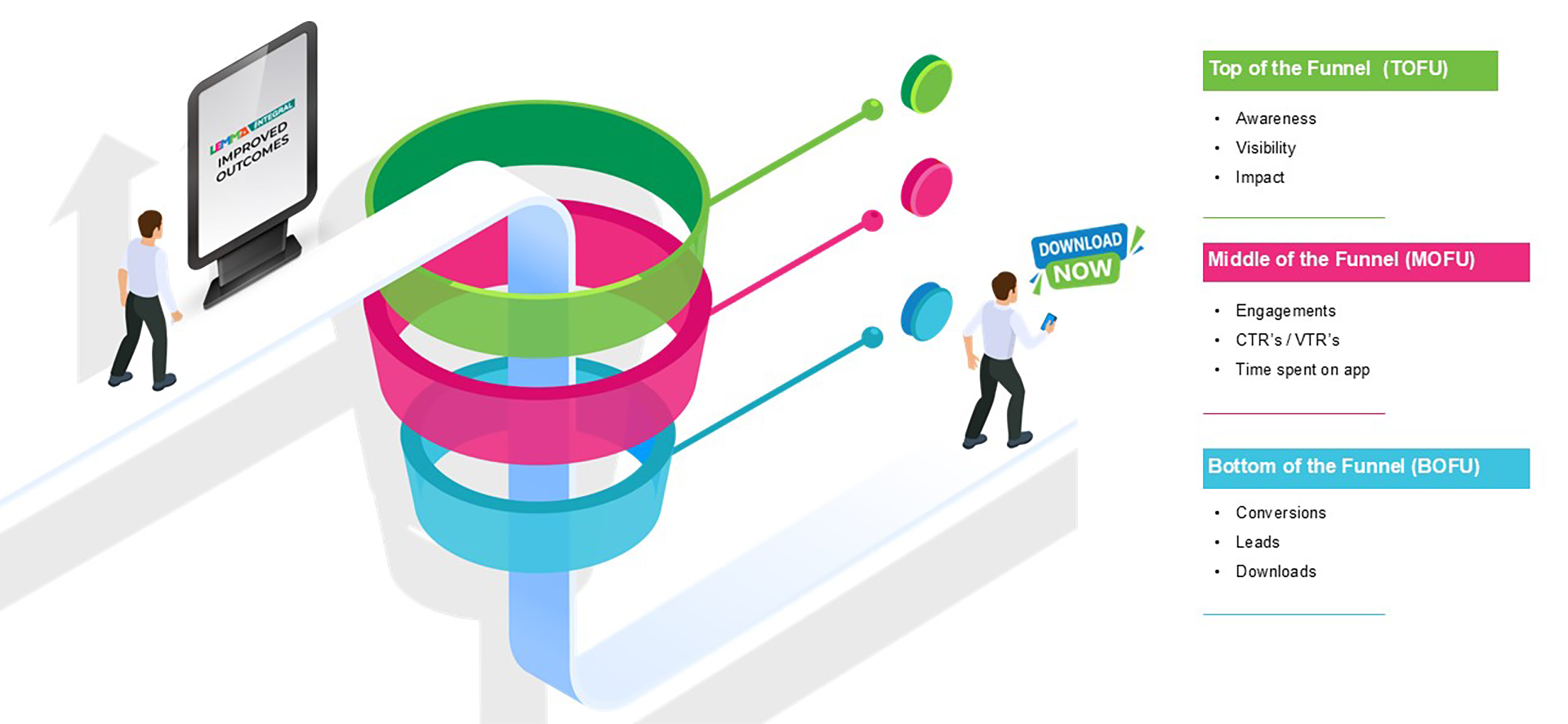 Instead of siloed execution, brands need a connected, data-driven strategy that moves audiences seamlessly across every stage of the funnel.
How does each funnel stage actually drive growth?
TOFU: Are you creating demand or just chasing it?
The objective at the top of the funnel is awareness and reach. Channels like CTV, DOOH, online video, and other high-impact formats help brands improve recall, expand reach, and discover new audiences at scale.
TOFU is where incrementality begins. Without consistent upper-funnel demand generation, lower funnel performance weakens over time.
MOFU: Are you nurturing or losing your audience?
The middle funnel focuses on engagement and consideration. Channels such as programmatic display advertising, paid social media, native advertising platforms, retargeting, and email automation help brands build trust, nurture intent, and strengthen audience engagement.
This is often the most underoptimized stage, where many brands lose high-potential users before conversion.
BOFU: Are you converting efficiently or overspending?
The bottom funnel is focused on conversions and revenue. Performance channels such as search advertising on Google Ads and Bing, Performance Max campaigns, conversion-driven social campaigns, dynamic retargeting, and affiliate marketing help brands drive measurable outcomes.
However, BOFU strategies perform best when they are supported by strong awareness and consideration efforts from the upper and middle funnel.
What defines next-gen performance marketing?
Next-gen performance marketing is no longer just about optimizing isolated metrics. It is about integration, intelligence, and creating connected customer experiences across channels.
Brands are increasingly adopting omnichannel activation strategies across CTV, DOOH, mobile, and digital platforms while using first-party and contextual signals for smarter audience targeting. Combined with sequential storytelling and full funnel attribution models, this approach helps marketers create demand, nurture intent, and drive conversions more effectively.
How are CTV and DOOH changing performance marketing?
Emerging channels are no longer limited to awareness alone. CTV now combines premium storytelling with measurable outcomes, enabling household-level targeting and attribution while driving both brand lift and performance signals.
Similarly, DOOH enables real-time, location-based targeting and integrates with mobile for retargeting and attribution. Together, these channels help bridge the gap between offline visibility and online action, creating a truly connected omnichannel ecosystem.
How do you build a winning full funnel strategy?
A strong full funnel strategy ensures wider reach at the top, stronger engagement in the middle, and higher conversions at the bottom. By aligning data, creatives, and channels, brands can move from fragmented campaigns to connected customer journeys that deliver both efficiency and long-term growth.
Conclusion: From Metrics to Meaningful Growth
Next-gen performance marketing is no longer about optimizing isolated metrics. It is about creating a holistic brand experience that delivers both immediate results and sustained growth.
This is where platforms like Lemma play a crucial role. By enabling full funnel advertising strategies across programmatic DOOH, CTV, and omnichannel ecosystems, Lemma empowers brands to execute integrated campaigns that drive awareness, engagement, and conversions seamlessly.
The future of marketing is not just about performance. It is about building brands that perform consistently across every stage of the customer journey.